Microsoft Azure · Internal feedback processing system
Company
Microsoft Azure is one of the world’s largest cloud platforms, used across enterprises and engineering teams globally. At this scale, even internal tools must meet strict reliability, governance and security standards, because small UX decisions impact thousands of users and downstream workflows.
Role
I worked with the Azure team on designing an internal feedback processing system used by product and engineering teams to collect, normalize and act on user insights at scale.
My role covered discovery, UX architecture, interaction design and collaboration with engineering to ensure the system integrated cleanly into Azure’s internal workflows.
Results
Feedback processing
speed
Requests analyzed
per day
Feedback items
a day
Case study
Turning feedback from a passive inbox into an actionable product signal
The goal was to turn fragmented input from multiple sources into structured, decision-ready data, helping teams prioritize improvements and close the loop with users more effectively.
The tool later became the foundation for Microsoft’s whole feedback center: the same model of feedback items, statuses and linked features is live today across the public Feedback Portal.
01
Designed inside Fluent 2
At Microsoft, I worked with their Fluent design system. The feedback base is built on it and follows its standards and documentation, which meant designing inside an existing corporate system rather than inventing a new visual language.
02
Less manual triage
Most of the people working with feedback were engineers who sorted it by hand on top of their main work. Every item that arrived without a clear area, owner or status meant another round of questions before anyone could act on it.
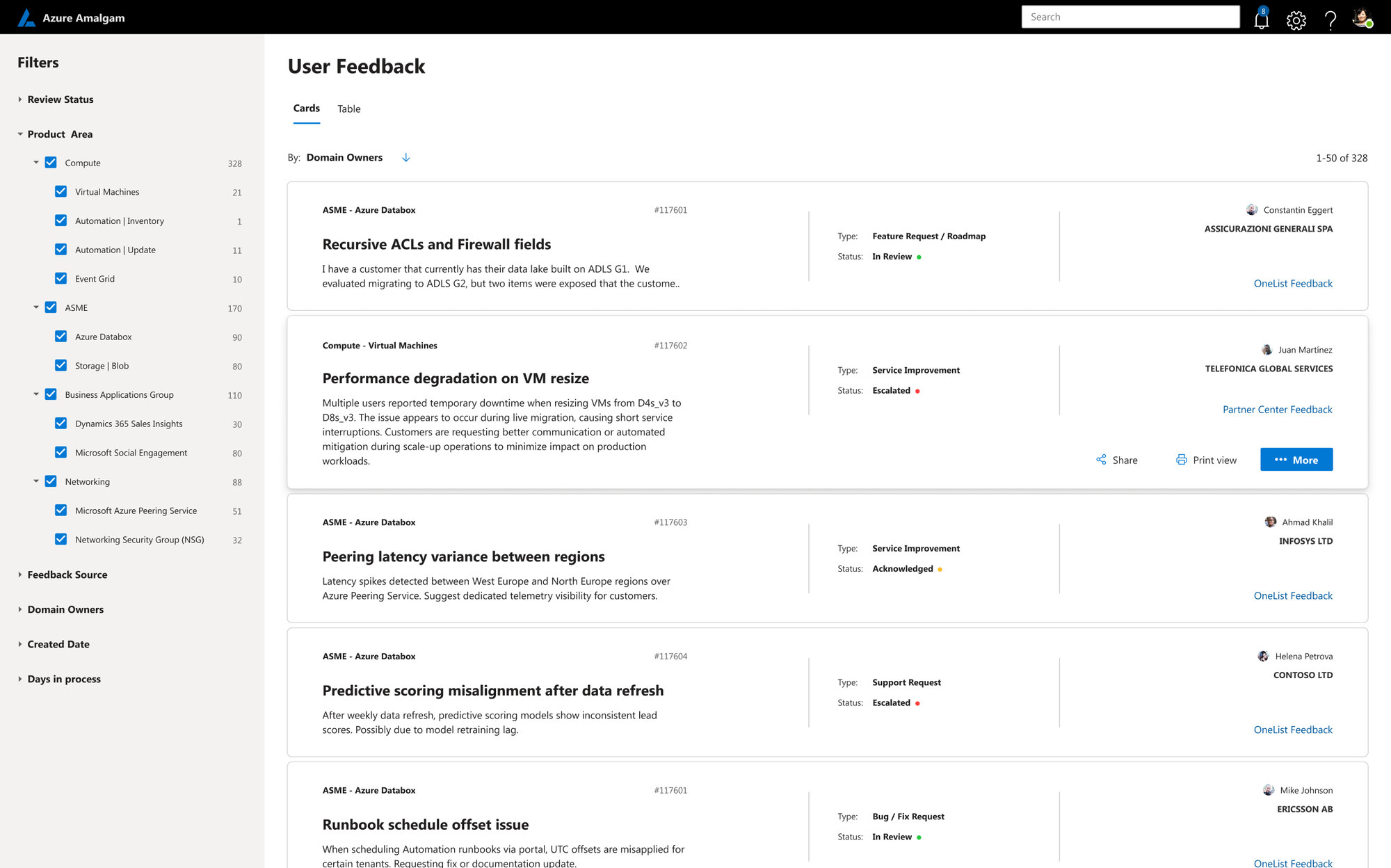
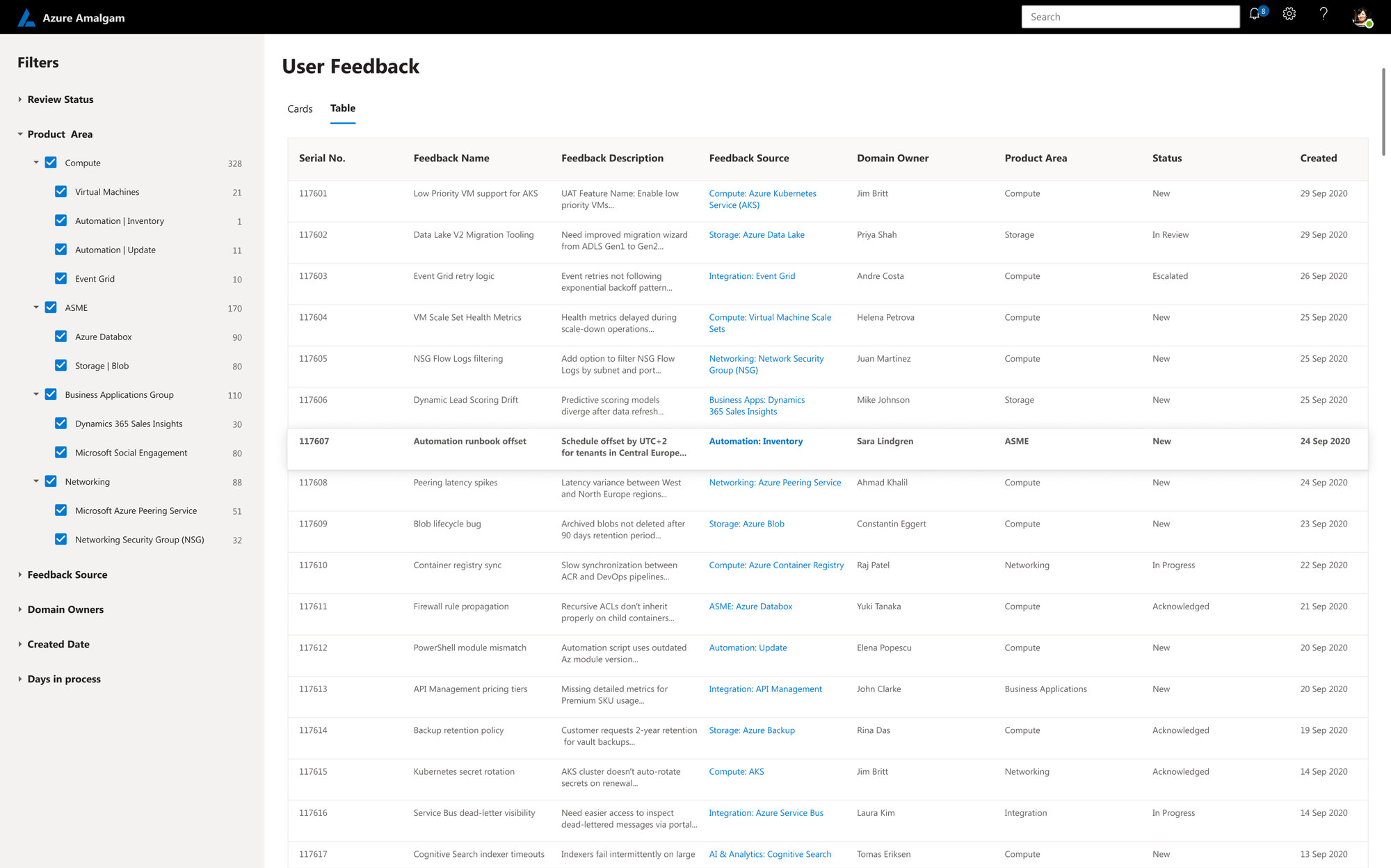
So the interface was built around fast triage: the fields that decide where an item goes are filled in up front, and the list shows at a glance what is new, what is waiting for an owner and what is already linked to a feature. Less time spent sorting means more time left for actually fixing things.
03
One model, from a single request to a feature
I translated complex requirements from multiple stakeholder groups into a unified model of how feedback moves through the system.
- Captured: input from different sources lands in one list with a shared structure
- Routed: every item has a product area and a domain owner
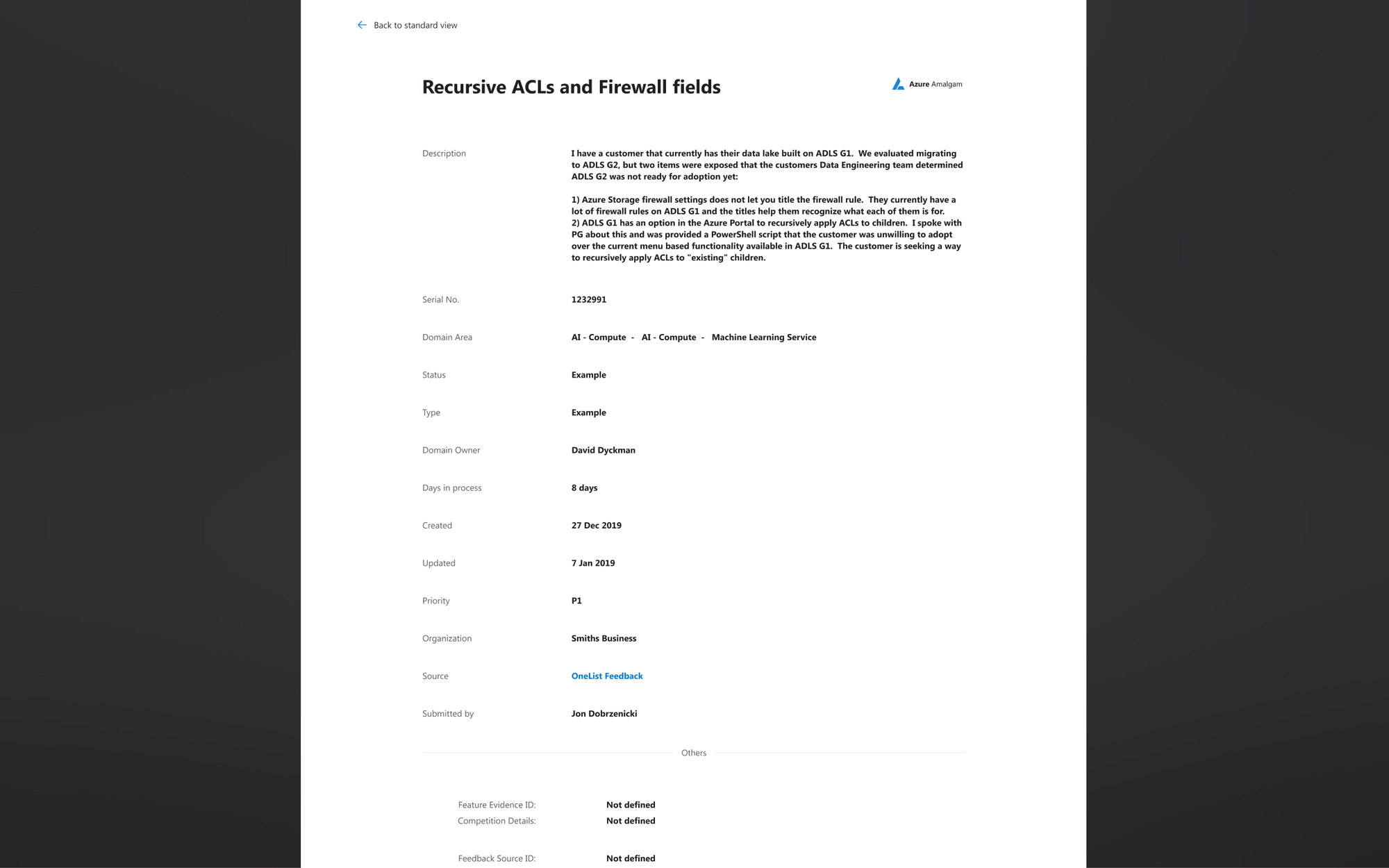
- Enriched: status, type, priority and days in process are visible at a glance
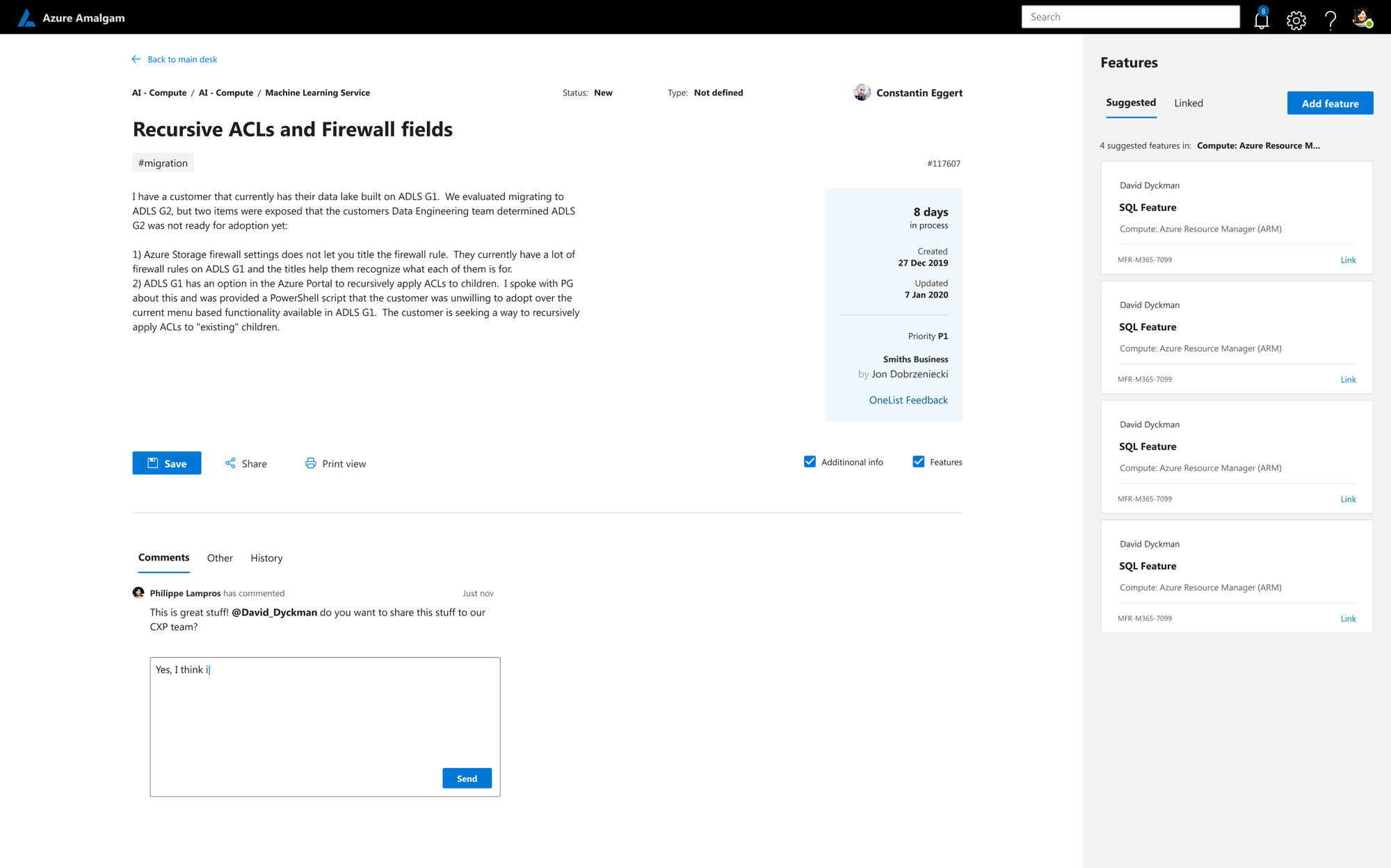
- Resolved: feedback is linked to features, so teams can close the loop with users
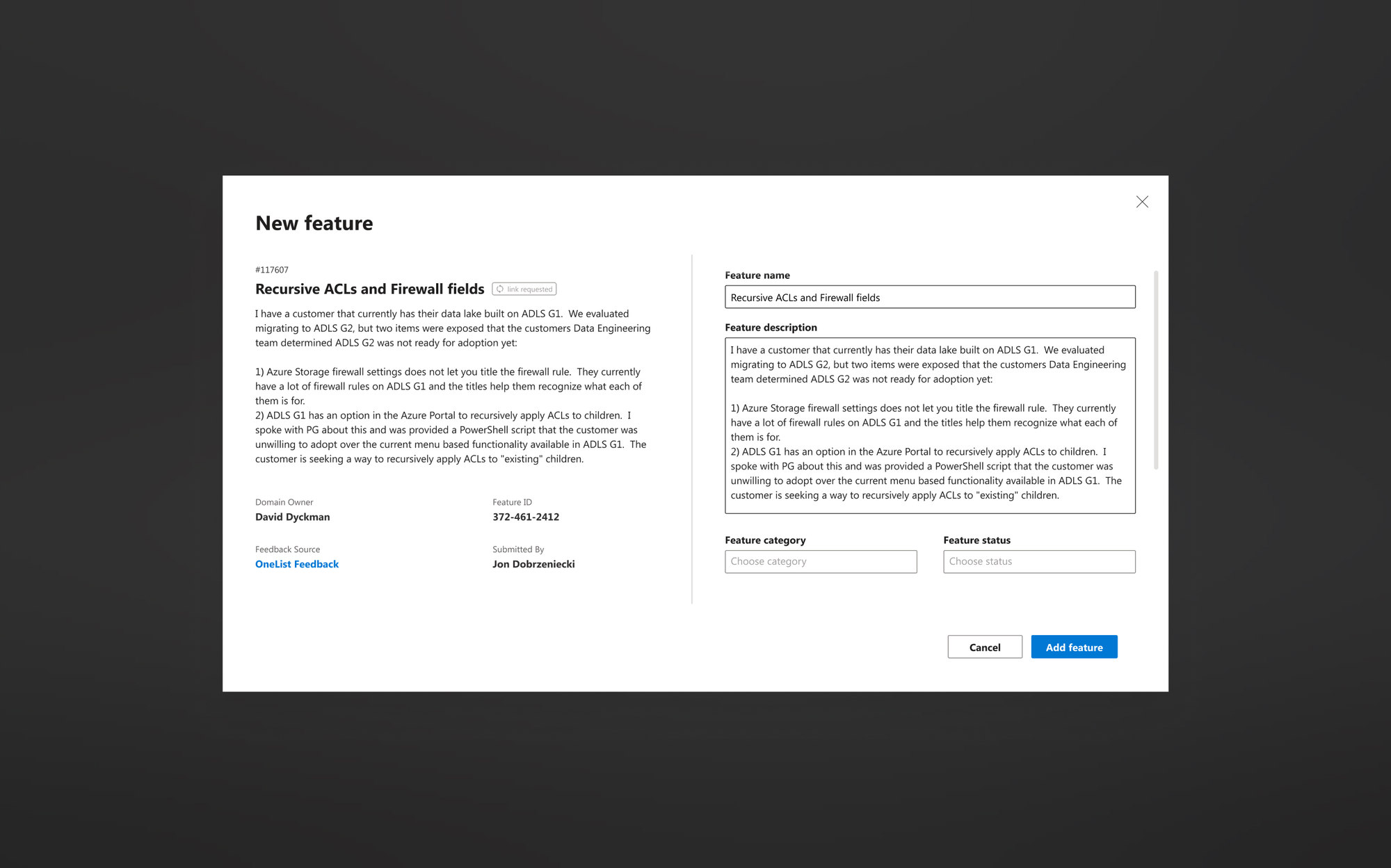
A feedback item is more than a message. Its page keeps the context, the discussion and the features it relates to, and a new feature can be created straight from it.